

Oklahoma had over 9,000 untested rape kits, about 2,000 more than were reported in a 2018 audit.
Danielle Tudor, a sexual assault survivor and member of the state Sexual Assault Forensic Evidence Board, presented the figures during an interim study at the Oklahoma Capitol on Thursday. Oklahoma law already requires law enforcement to submit newly collected sexual assault kits to labs for testing within 20 days but does not have a clear guideline for completing the testing, Tudor said.
The Sexual Assault Forensic Evidence Board wants lawmakers to introduce legislation next year that would set clear deadlines, requiring medical facilities to notify law enforcement within two days of collecting a rape kit. Law enforcement would have 14 days to pick up a kit, and laboratories would have 180 days to test it under proposed legislation the board wants.
“We’re definitely at the very high end at 180 days. If you look at the other states across the country, 180 days is max,” Tudor told The Frontier. “Most are under that, but I feel like we’re starting somewhere.”
Tudor was featured in a 2017 Frontier investigation into how Oklahoma handles sexual assault cases. For years, she has pushed for the state to clear its backlog of untested rape kits.
Untested kits can leave serial offenders unidentified, potentially allowing them to assault more victims, sometimes across state lines, Tudor said. DNA profiles from tested rape kits in Oklahoma have pinged across the U.S. and internationally. Some were already under investigation with the FBI, ICE and the U.S. Army, according to information from the Sexual Assault Forensic Evidence Board.
Support The Frontier
Help fund investigations like this one
The Frontier is a nonprofit newsroom. Your donation pays reporters to investigate powerful institutions across Oklahoma.
Become a donorThe Oklahoma State Bureau of Investigation is the primary lab that receives untested rape kits and processes them for DNA. The Tulsa Police Department and Oklahoma City Police Department have their own labs for their untested kits.
Tudor said after speaking to OSBI and the Tulsa Police Department, she and the labs believe they could get kits tested within the 180-day range. A spokesperson for the Oklahoma City Police Department told lawmakers the agency is currently completing rape kit testing within 90 days.
Officials from OSBI and the Tulsa Police Department crime labs told state lawmakers at the hearing that caseloads have grown over the past several years, and they need additional staff and funding to complete the testing within 180 days. OSBI receives 120-150 rape kits per month, triple what it was in 2019, said Mistie Burris, criminalistics administrator for the agency. OSBI has 580 pending sexual assault cases waiting on a shelf for biology analysis, and it takes approximately 182.4 days to complete the process, Burris said.
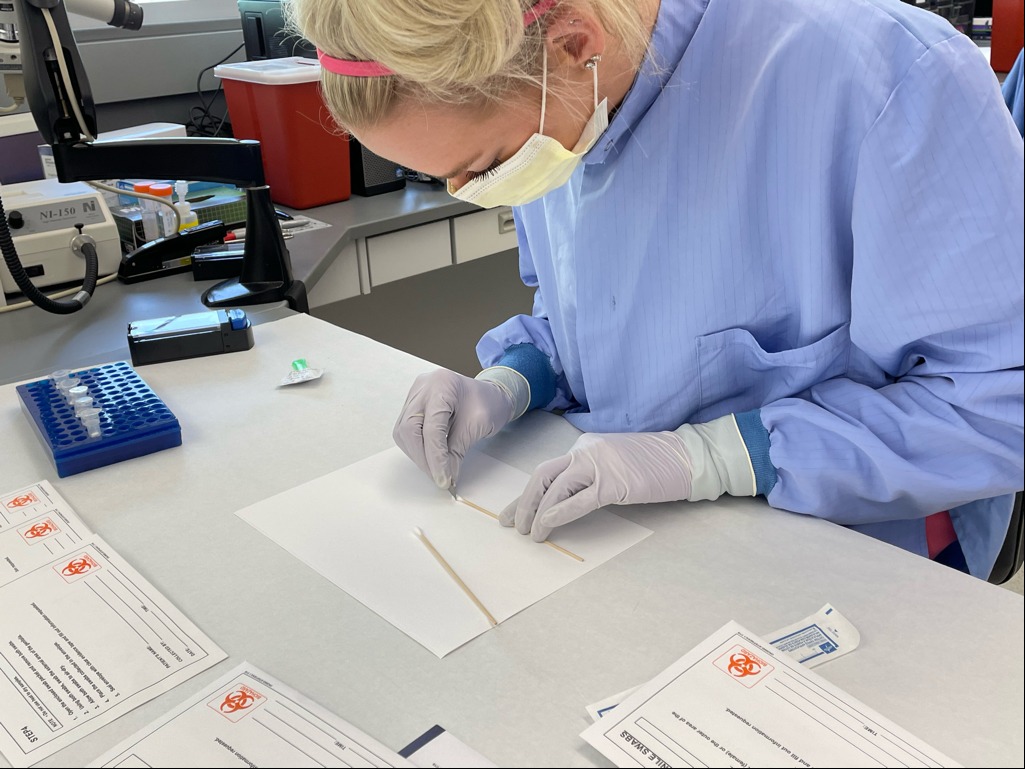
“We’re getting more and more requests every day,” Burris said.
Byron Smith, Tulsa Police Department Forensic Laboratory operations manager, told lawmakers Thursday that its lab is a “small municipal lab” and that 35% of its cases involved a sexual assault in 2018. That had risen to 57% in 2025.
Smith said the forensic lab has reduced the DNA backlog to 759 cases, but 692 cases stem from a sexual assault.
Smith said 91% of the department’s backlogged DNA requests are from the lowest priority cases. Tudor explained to The Frontier that they place the kits into a priority category, with the lowest indicating a victim chose not to pursue criminal prosecution.
Tudor also said part of the proposal is to preserve rape kits for people who choose not to report the crime to police. Under Oklahoma law, when a victim decides not to report the crime to police, law enforcement isn’t required to submit the rape kit to the lab for testing.
Since 2019, Oklahoma has advanced efforts to fix the rape kit backlog by passing legislation that directed OSBI to develop a tracking system allowing victims to monitor their rape kit status, mandated at least two hours of continuing law enforcement training on sexual assault, and required testing of all sexual assault kits. In 2024, the Oklahoma legislature removed the statute of limitations for sexual assault cases once DNA evidence is present or a perpetrator confesses.
“Somewhere along the line we have to care, and I think as a country we got to that point as we started testing the rape kit backlog,” Tudor told The Frontier.


Ashlynd Baecht joined The Frontier in 2023 as a criminal justice reporter. Contact Ashlynd at Ashlynd@readfrontier.com