

Archie Riley couldn’t sign his own plea deal.
The 67-year-old has severe arthritis in his hand that makes it difficult to write, according to court records. It’s one of the reasons he struggles to work full time and can’t afford to pay the $1,358 he owes the court for a 2025 conviction for driving under the influence without a valid license.
Riley lives below the federal poverty level, lacks permanent housing, and receives food stamp benefits and Social Security SSI payments. He consistently struggles to buy food, according to court documents.
A 2023 state law requires judges to consider a defendant’s ability to pay their fines and fees. If the defendant receives certain government assistance, including food stamp benefits, or makes significantly below the poverty level, the judge must reduce their debt or clear it completely.
But that’s not what happened for Riley.
Oklahoma County Special District Judge April Collins denied Riley’s request to waive his court fines and fees in July, though she wrote in court documents he presented “sufficient evidence of a current inability to pay.” Instead, she issued a judgment, meaning debt collectors could claim any future income Riley manages to make beyond his government assistance.
An attorney with Legal Aid Services of Oklahoma is challenging Collins’ decision at the Oklahoma Supreme Court. Collins argues waiving court fines and fees under the 2023 law is unconstitutional. The Oklahoma Constitution bans the Legislature from wiping away debt owed to the state, counties or cities.
Oklahoma County isn’t forgiving any fines and fees for those who say they can’t afford to pay while the legal challenge plays out.
Lawyers presented their arguments in the case to an Oklahoma Supreme Court referee in September and are awaiting a decision from the justices.
Collins and her attorney declined to answer questions about the Riley case.
“Judges enter rulings based on the way they believe the law reads,” Renée Troxell, Oklahoma County trial court administrator, said in a statement. “Those opinions get appealed if one side or the other disagrees. Judges do not have an opinion on how they want the appellate court to rule.”
Collins tried to deny reporters entry in September to proceedings in her courtroom, which are open to the public. The judge only allowed reporters to remain after they asked her to cite any law that requires the hearings to be closed. There isn’t one. She said she keeps the proceedings confidential to respect the privacy of defendants.
If the Oklahoma Supreme Court decides the 2023 law is unconstitutional, it would eliminate one of the only ways poor people in the criminal justice system can escape debts that can sometimes take them years or even decades to pay off, said Anthony Severin, an attorney with the legal defense organization Still She Rises.
“It is a path out of a vicious cycle,” he said. “There is a cycle of poverty that criminal fines and fees can exacerbate.”
Oklahomans can have their driver’s license suspended if they don’t pay their court fines and fees. And state law allows judges to order jail time if the court determines a defendant can afford their fines and fees but willfully refuses or neglects to pay.
Severin said the challenge could also put expungement, drug court programs and other mechanisms for waiving fines and fees at risk.
Law intended to eliminate ‘debtor’s prison-type situation’
Defendants in criminal cases in Oklahoma pay dozens of fines and fees to help fund the criminal justice system, ranging from $10 for courthouse security to hundreds of dollars in combined charges to defray costs for court administration, prosecutors, police and jailers.
Critics argue fines and fees are unreliable sources of funding that disproportionately burden poor people. The debt adds up quickly, even for nonviolent crimes. A person convicted of trespassing and causing property damage, for example, will owe up to $500 in fines, not including other miscellaneous fees.
An ongoing 2017 class-action lawsuit alleges indigent criminal defendants in Oklahoma municipal and state courts were being unfairly targeted by a debt collection agency for failing to pay. Fearing similar lawsuits and an overreliance on declining fines and fees to fund the courts, lawmakers created a committee in 2022 to examine how fines and fees are collected in state courts.
The committee is made up of district and municipal court judges, clerks, advocates for indigent defendants and members of the sheriff’s association. In her capacity as the state’s former administrative director of the courts, Jari Askins was appointed as its first chairperson.
Over the next two years, the committee voted “line-by-line” on a long list of proposed changes, Askins said.
Those changes landed on the desk of Rep. Danny Sterling, R-Tecumseh, who chairs the appropriations subcommittee that funds Oklahoma’s courts.
Sterling said he agreed to sponsor the measure to break the cycle of arresting people repeatedly for failing to pay court debts. House Bill 2259 was signed into law in 2023 by Gov. Kevin Stitt.
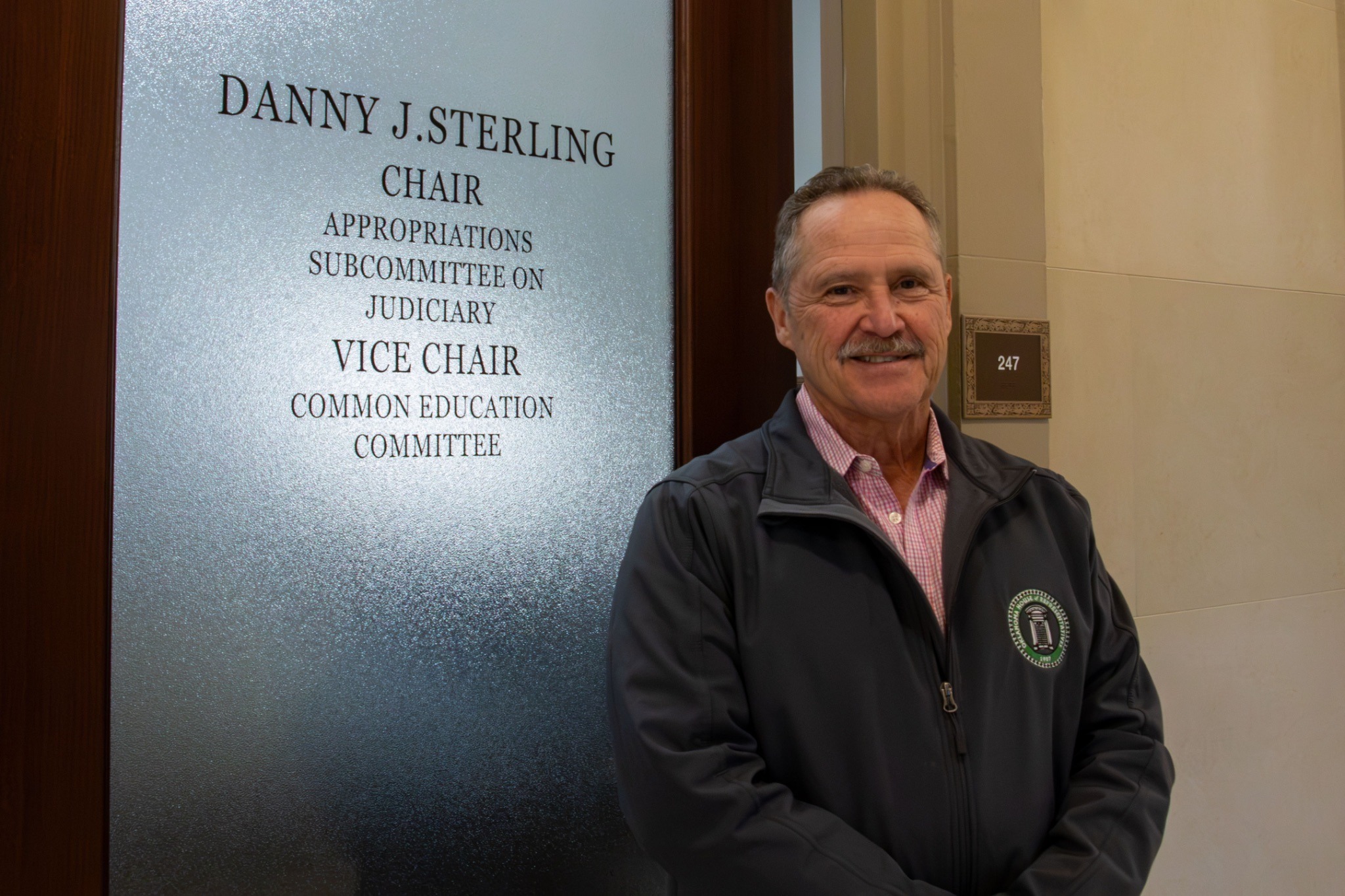
“We were just creating the debtor’s prison type situation,” Sterling said. “Everybody was losing out — the victim, the court systems.”
Sterling said the law is a tool for judges to work with defendants to create custom payment plans, increasing the likelihood that the court will collect at least some money. Previously, courts were spending time and resources tracking down or jailing people who would never be able to afford their debt, he said.
Askins was surprised to hear Collins was challenging the constitutionality of the law because she was part of the committee that wrote it.
Some judges waive fines and fees; others don’t
Across the state, Legal Aid Services of Oklahoma, which provides free legal representation to people who can’t afford attorneys, has used the 2023 law to help clients get more than $2.1 million in court fines and fees waived as of Oct. 19 of this year.
In Cleveland County, District Judge Michael Tupper waived more than $10,000 in fines and fees during one hearing reporters observed in February.
One defendant had lost her job and was relying on food stamp benefits, her pro-bono attorney told the judge. Another receives a $600 disability check each month and recently had to visit a food pantry.
“I am really proud of you for staying out of trouble since you got released,” Tupper told one defendant. “Let’s give you a fresh start.”
It was similar in Pottawatomie County, where in about an hour one day in November 2025, District Judge John Canavan waived more than $97,000 from 10 defendants. Pottawatomie County charges defendants for the cost of their jail stays, which are included in their fines and fees.
But not all judges are willing to waive fines and fees.
Support The Frontier
Help fund investigations like this one
The Frontier is a nonprofit newsroom. Your donation pays reporters to investigate powerful institutions across Oklahoma.
Become a donorEd Wunch, an attorney with Legal Aid who defends low-income clients in cost hearings, said he can think of at least 14 counties where judges are unlikely to grant financial relief unless a defendant has a lawyer.
“Because judges have sometimes gone unchallenged on this for so long, they really just think they have carte blanche,” Wunch said.
Wunch has represented clients during cost hearings in at least 36 counties over the past decade. But resources are limited; Legal Aid has just four attorneys to work cost hearings across the state, so the organization focuses its efforts in the few counties where they feel they can make the biggest impact.
In other places, Wunch gives clients advice and materials to advocate for themselves, and tells them to report back if they have trouble. He said he rarely attends hearings in Oklahoma County because it’s unlikely to make a difference.
During an Oklahoma County cost hearing reporters attended in Collins’ courtroom in September, she didn’t waive fees for either of the two defendants present, even though each met at least two criteria under the law that automatically qualify them for a waiver.
“I would love it if you could waive it,” said Jonathan Fuller, who receives food stamp benefits and federal housing assistance. Fuller pleaded guilty to driving under the influence and obstructing an officer in 2021 and received a deferred sentence.
“I can’t do that,” Collins said.
Collins typically presides over two cost hearings a week, each with an average of five to nine defendants. Yet in a single week in May, before the legal challenge, she didn’t approve cost-reduction waivers for any defendants unless they completed community service.
“I think that Judge Collins is very hesitant to waive fines because she thinks if just enough time goes by, the money will suddenly appear,” Wunch said.
Fuller has attended nine cost hearings in Oklahoma County since 2019 because he couldn’t afford to pay his debt. He previously presented documents for Collins to review that show he receives public assistance, but she didn’t waive his fines and fees as state law requires. Instead, she offered Fuller the option to pay them off with community service, chipping $45 off his nearly $3,000 in debt for each hour completed.
Fuller has a physical impairment in his hand that hinders his ability to grasp objects and severe pain in his left shoulder, which he says makes physical labor difficult. He’s attending college with student loans and had $0 to his name in 2019, according to a form he filed with the court in December of that year.
Fuller said he feels like he’s being punished for being poor.
“It’s like being a caged bird,” Fuller said. “You’re out, but you’re still caged up because something’s hanging over your head.”


Maddy Keyes interned for The Frontier and then joined the outlet in 2024 after graduating from the University of Oklahoma. Email her at Maddy@readfrontier.com