

Oklahoma County will continue to face costly lawsuits stemming from its overcrowded, understaffed jail unless reforms allow more people to be released into the community before trial, said Oklahoma County District Attorney Vicki Behenna at an interim study at the Capitol on Wednesday.
The county has paid at least $9 million this year to settle lawsuits over two deaths at the Oklahoma County jail. One detainee died of a perforated ulcer in 2021; the other was beaten to death by a cellmate that same year.
Both detainees were being held on nonviolent charges before they’d received a trial.
The interim study examined practices for setting bail and releasing people charged with crimes before trial if they don’t pose a safety or flight risk.
Behenna told state lawmakers that Oklahoma County needs more money and staff to ensure fair bond hearings for people awaiting trial. Rep. Erick Harris, R-Edmond, and Sen. Dave Rader, R-Tulsa, proposed a bill last year that would have appropriated state funds to the county to improve its bail practices, but it didn’t pass.
In the meantime, defendants aren’t getting the due process and equal protection rights they are guaranteed under the U.S. Constitution, Behenna said. An average of 89% of inmates at the Oklahoma County Detention Center are being held before they have been convicted of criminal charges, according to a jail spokesperson.
Support The Frontier
Help fund investigations like this one
The Frontier is a nonprofit newsroom. Your donation pays reporters to investigate powerful institutions across Oklahoma.
Become a donorBail hearings in Oklahoma County last just minutes, if not seconds, and defendants aren’t asked questions about their individual circumstances, The Frontier and KOSU previously reported. The Oklahoma Court of Criminal Appeals has ruled that detainees have a constitutional right to individualized bail hearings in which a judge considers how likely they are to show up to court, financial circumstances and other factors that could affect their ability to post bail.
“We don’t have the resources, and each day we don’t do the individualized hearings, we are reckoning with whether or not there’s going to be another [lawsuit],” Behenna said.
Harris, who hosted the interim study, said he plans to attend bail hearings in Oklahoma County, though he wishes to address pretrial concerns statewide.
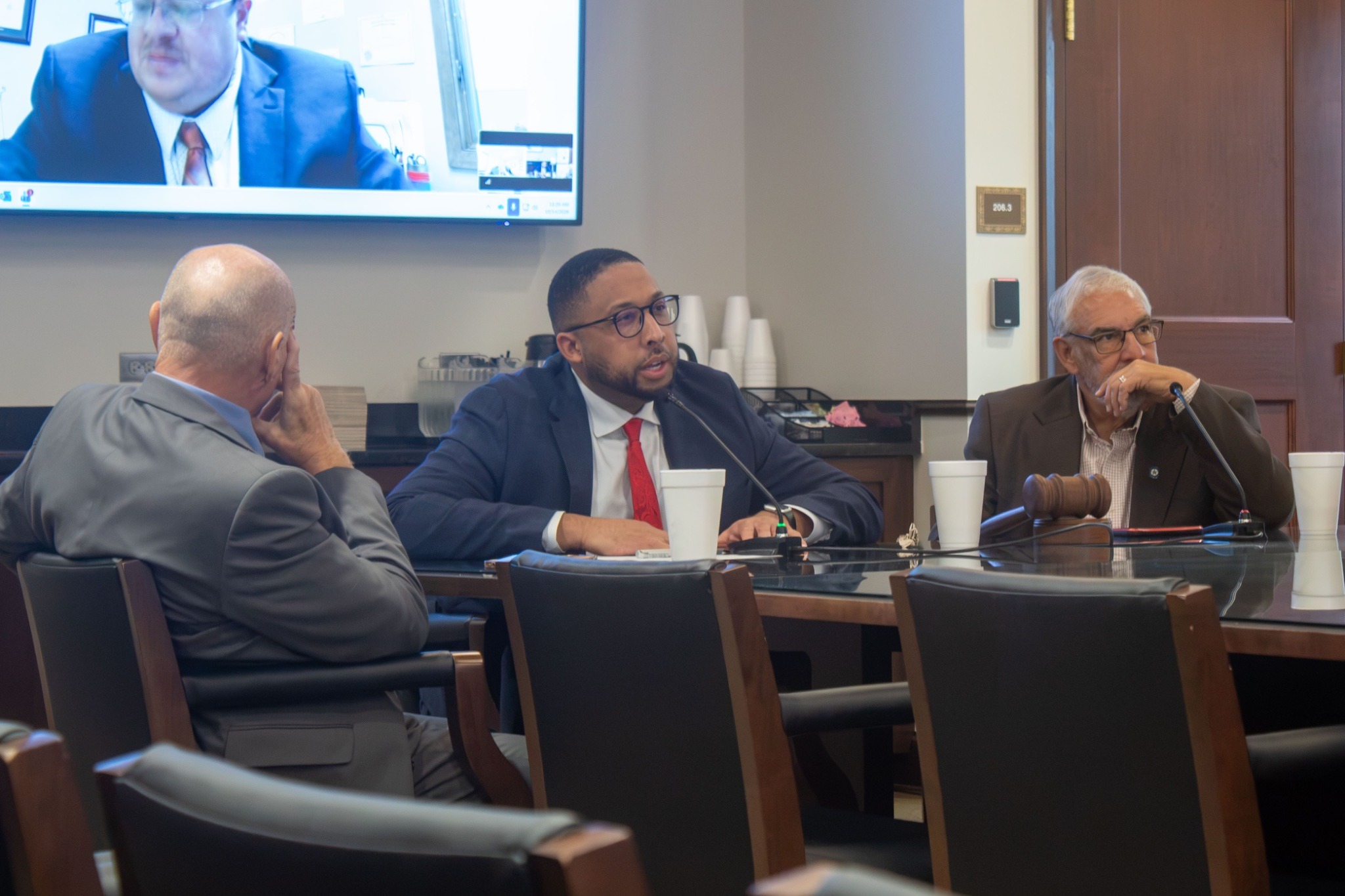
“The state has an obligation and a duty, when you take someone into custody, to provide care for that individual, and when counties don’t do that, there are some repercussions, and usually they’re financial,” Harris said.
The interim study examined some solutions that Oklahoma might consider.
A pilot program in Mississippi that embeds attorneys at pretrial hearings has resulted in 131 out of 155 people accused of a felony being released pretrial with conditions, such as routine drug tests or wearing an ankle monitor. Only four of the individuals failed to appear for their hearings.
In North Dakota, defendants fill out a form when they are booked into jail, answering questions about their personal circumstances, and are appointed lawyers at bond hearings. Travis Fink, executive director of the Commission on Legal Council for Indigents, said the program cost the state $463,644 for eighteen months.
And in Tulsa County, courts have daily bond dockets to ensure defendants see a judge within 24 to 48 hours of arrest, even on holidays and weekends. Each defendant gets a court-appointed lawyer who is present at the jail during their hearing.
The reforms were motivated by a 2024 civil rights lawsuit over Tulsa County’s bail practices.
The new process requires more funding and staff but doesn’t slow down bail hearings, said Christopher King, administrative officer of Tulsa County Court Services.
Each month, between 550 and 600 defendants in Tulsa County are determined able to remain safely in the community pretrial, saving the county more than $1.2 million in what it would cost for each person to stay in the county jail for 30 days, King said.
Court services staff check in with released defendants, remind them of court dates and connect them with case managers. Eighty-seven percent of defendants released pretrial made their court appearances, according to King.
Harris coauthored Senate Bill 1618, or the Public Protection Act, last legislative session to require courts to use risk assessment tools to determine a defendant’s threat to the public and how likely they are to show up to court. The interim study will inform legislation Harris plans to introduce next year regarding the state’s pretrial and criminal justice systems, he said.
“That’s the intent behind this: to make beds available for the bad folks, and the folks that made a stupid decision, give them an opportunity to go through the criminal justice process while still ensuring that they’re working, they’re paying taxes, they’re taking care of their family,” Harris said.


Maddy Keyes interned for The Frontier and then joined the outlet in 2024 after graduating from the University of Oklahoma. Email her at Maddy@readfrontier.com