
In September and October of 2025, agreements were made between Immigration and Customs Enforcement (ICE), the Oklahoma Department of Corrections (OKDOC) as well as the largest private prison company in the United States, CoreCivic, formerly Corrections Corporation of America (CCA). The agreements focused on reopening the Diamondback Correctional Facility in Watonga, OK as a dedicated ICE detention facility. The OKDOC, for a monthly administrative fee of $833,333 would serve as an intermediary from which payments would pass through. On October 1, 2025, CoreCivic released a press statement announcing the 5-year contract. It also mentioned it would receive a ‘fixed monthly payment plus incremental per diem payment based on detainee population.’ Once fully operational, CoreCivic estimated annual revenue from this one detention facility to be around $100 million.
This co-investigation between The Frontier and independent documentary photographer Greg Constantine, places a microscope on the Diamondback Correctional Facility. Diamondback is a 2,160 bed prison owned and operated by CoreCivic. Diamondback opened in 1998 and held out-of-state and federal prisoners until it closed in 2010. It sat empty or ‘idle’ for over fifteen years. With billions of new funding for ICE detention approved by Washington DC in support of the Trump Administration’s mass deportation policies, Diamondback reopened in late 2025. ICE began detaining immigrants in Diamondback in late December 2025/early January of 2026. During a Q2 earnings call on August 7, 2026, CoreCivic CEO, Patrick Swindle reported–as of June 30, 2026–1,560 immigrants were being detained each day in Diamondback, making it one of the largest immigration detention centers in the country. Recent statistics released by ICE show 86% of those detained in Diamondback have no criminal history.
Details related to the financial workings of contracts between ICE and contracted partners like the OKDOC and CoreCivic are often heavily redacted, leaving the revenue generated from a facility like Diamondback, as well as revenue generated by other parties as a result of the detention of immigrants, opaque and somewhat of a mystery.
Open Records Requests filed by Constantine over the past six months have produced invoices, bank records, contracts, utility bills and other materials. The materials here are organized into layers that show how CoreCivic, the Oklahoma Department of Corrections, Blaine County and the City of Watonga (population 2,500) are all making money from the incarceration of immigrants in Diamondback. Financial details commonly redacted in ICE contracts are exposed through monthly invoices from CoreCivic and the unredacted ‘Note’ sections found in these invoices. They reveal increasing ‘fixed monthly payments’ over time as well as ‘per diem rates per detainee’ and revenue from staff costs and transportation billings. Publicly available tax records and unredacted contracts presented alongside various monthly reports show how Blaine county and the City of Watonga are also significant beneficiaries from Diamondback.
Presented here, the documents expose a rare view into how in six months (from October 2025 until the end of March 2026) Diamondback went from being a dormant, non-operational prison to quickly generating tens of millions of dollars in revenue as a direct result of the incarceration of immigrants. They reveal how CoreCivic, the state and local government are making money from the incarceration of immigrants at Diamondback. And through this snapshot of time, they show how much money corporate interest and government make from the incarceration of immigrants at Diamondback.
Diamondback Correctional Facility
Detention for Dollars
How Oklahoma Cashes In on Immigration Detention
After sitting idle for over a decade, a for-profit prison in rural Western Oklahoma is now a key hub in the Trump Administration’s plan to carry out the largest mass-deportation effort in U.S. history.

Diamondback Correctional Facility in Watonga, Oklahoma. GREG CONSTANTINE
Diamondback Correctional Facility in Watonga once held out-of-state inmates until it closed in 2010 after Arizona prison officials opted not to renew the contract. The prison was shuttered until late 2025 after its owner, private prison company CoreCivic, won a lucrative contract with U.S. Immigration Customs and Enforcement worth millions. The Oklahoma Department of Corrections and the small Oklahoma town of Watonga are also making money from the deal.
By the end of June, Diamondback held 1,522 detainees, making it one of the largest immigration detention centers in the country. About 86% of those detained in Diamondback have no criminal history, according to figures from ICE.
The facility can hold up to 2,160 prisoners and the number of immigrants held at the facility continues to grow month by month, meaning more money.
A rare look inside the business of immigration detention
Invoices, bank records, contracts, utility bills and other documents obtained through open records requests show how CoreCivic, the Oklahoma Department of Corrections and the small town of Watonga are making money from the incarceration of immigrants in Diamondback.
How the money moves
ICE contracts with the Oklahoma Department of Corrections, which serves as the intermediary for payments to CoreCivic, the company that owns and operates Diamondback.
October 2025 – March 2026How the deal works
The Department of Corrections has a separate management agreement with CoreCivic to operate Diamondback. Department of Corrections is responsible for monitoring CoreCivic’s compliance with federal detention standards and “other administrative functions.” Each month, the Department of Corrections receives $833,333 to perform these duties.


When CoreCivic announced the five-year Diamondback contract in October 2025, the company estimated the prison could generate about $100 million in annual revenue once fully operational.
Six months
From an empty prison to $8.3 million in monthly revenue
The money started moving before detainees even arrived. Public records over the first six months of the contract show how Diamondback began generating revenue as ICE detention increased.
*This figure is an estimate from documents obtained from the city of Watonga.
See the money move month by month
Open any month to see the original invoices, detailed billing templates, payments and state financial records documenting the transactions.
October 2025
Avg. detained / day
0
Total payment
$2,000,000
OKDOC admin fee
$833,333
CoreCivic
$1,166,666
View records
Diamondback had not yet begun housing ICE detainees. Records show a fixed monthly payment of $2 million from ICE as the facility prepares to reopen.
The records


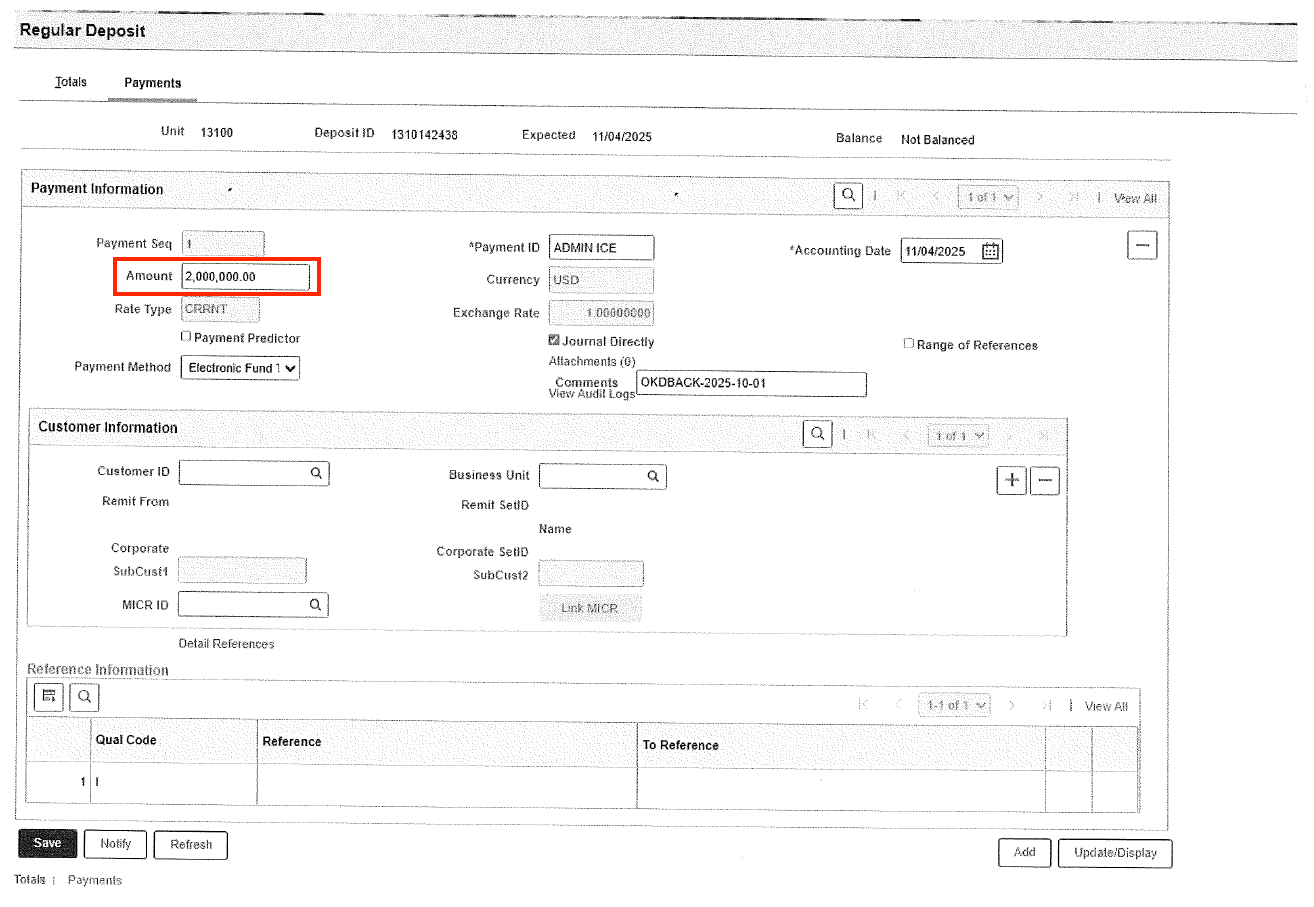
November 2025
Avg. detained / day
0
Total payment
$2,003,854
OKDOC admin fee
$833,333
CoreCivic
$1,170,521
View records
The November records show a payment of just over $2 million, even though the facility had not yet begun housing ICE detainees.
The records


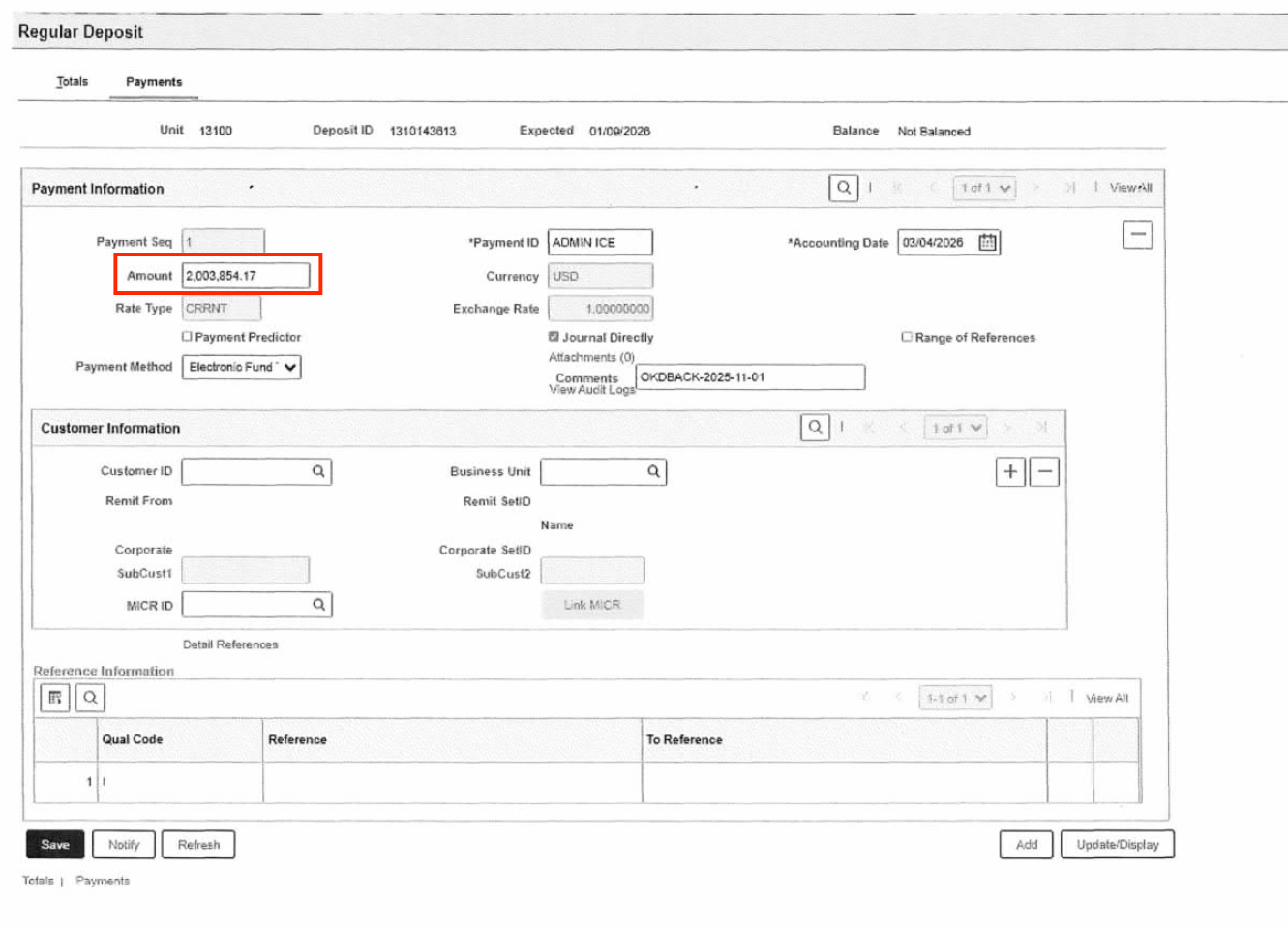
December 2025
Avg. detained / day
64 average detainees per day *
Total payment
$2,186,941
OKDOC admin fee
$833,333
CoreCivic
$1,353,608
View records
ICE detention began at Diamondback in late December. The records show detention bed charges appearing for the first time alongside an increase in the facility’s fixed monthly payment.
The records


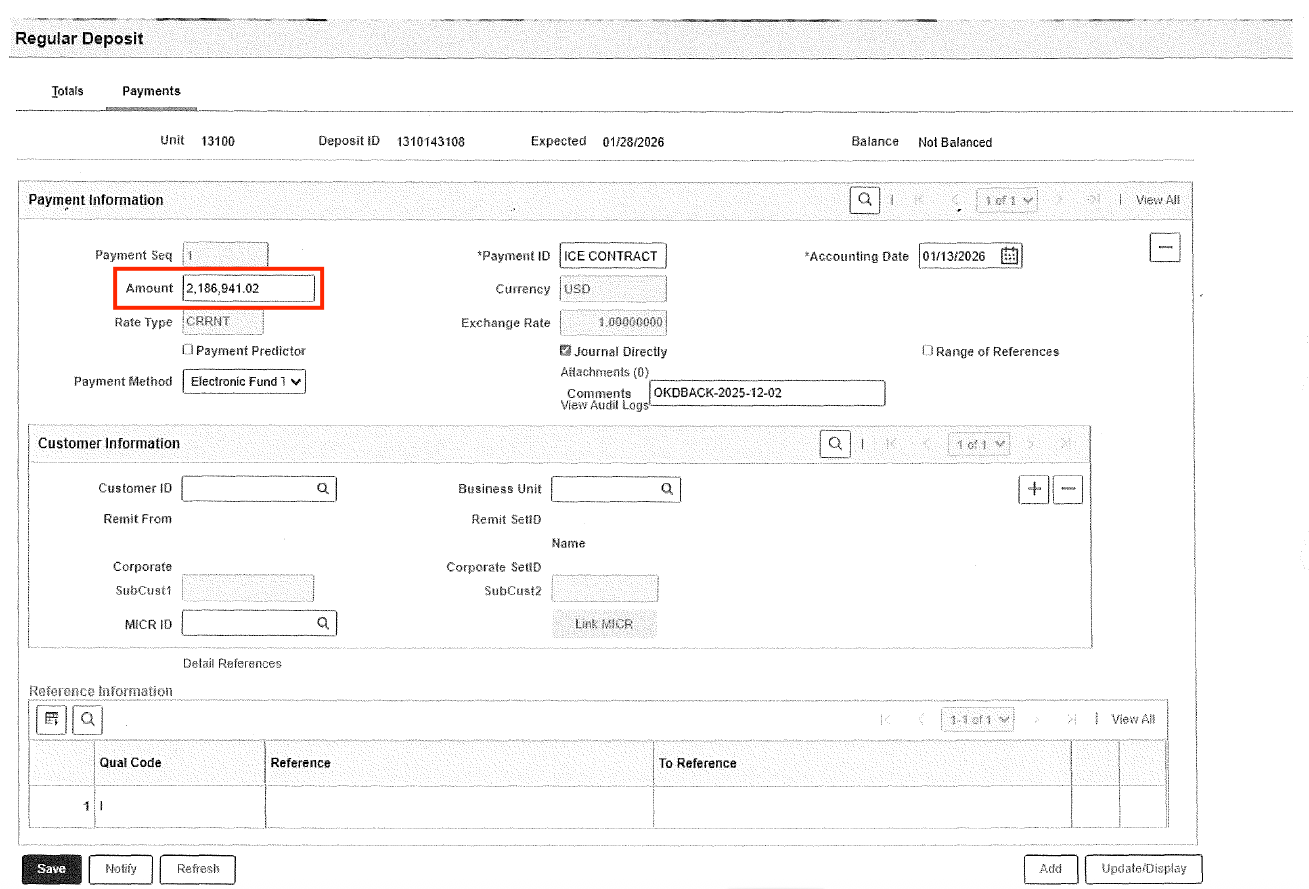
January 2026
Avg. detained / day
434
Total payment
$4,460,042
OKDOC admin fee
$833,333
CoreCivic
$3,622,854
View records
Hundreds of immigrants begin arriving at Diamondback.
The records


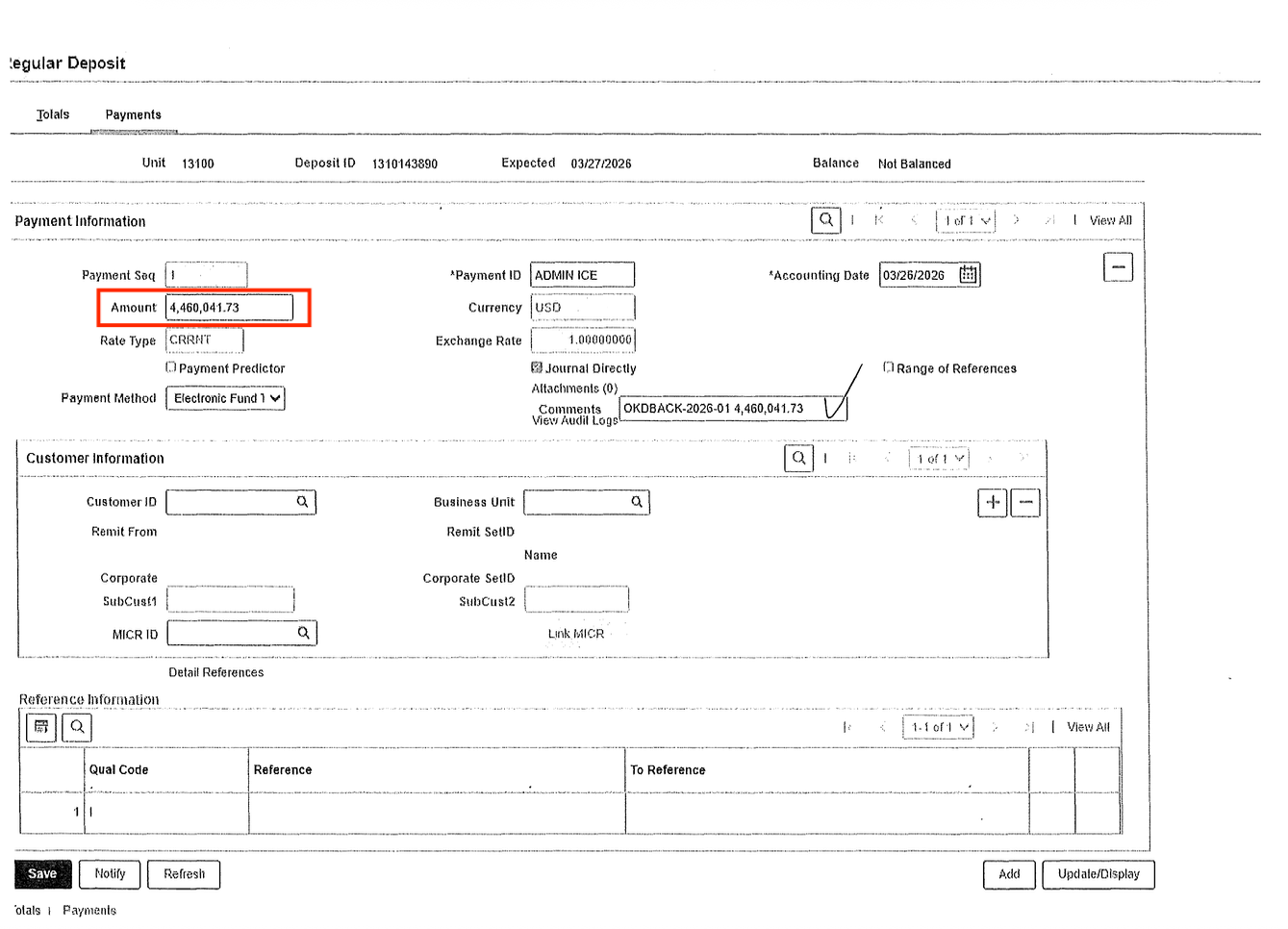

February 2026
Avg. detained / day
685
Total payment
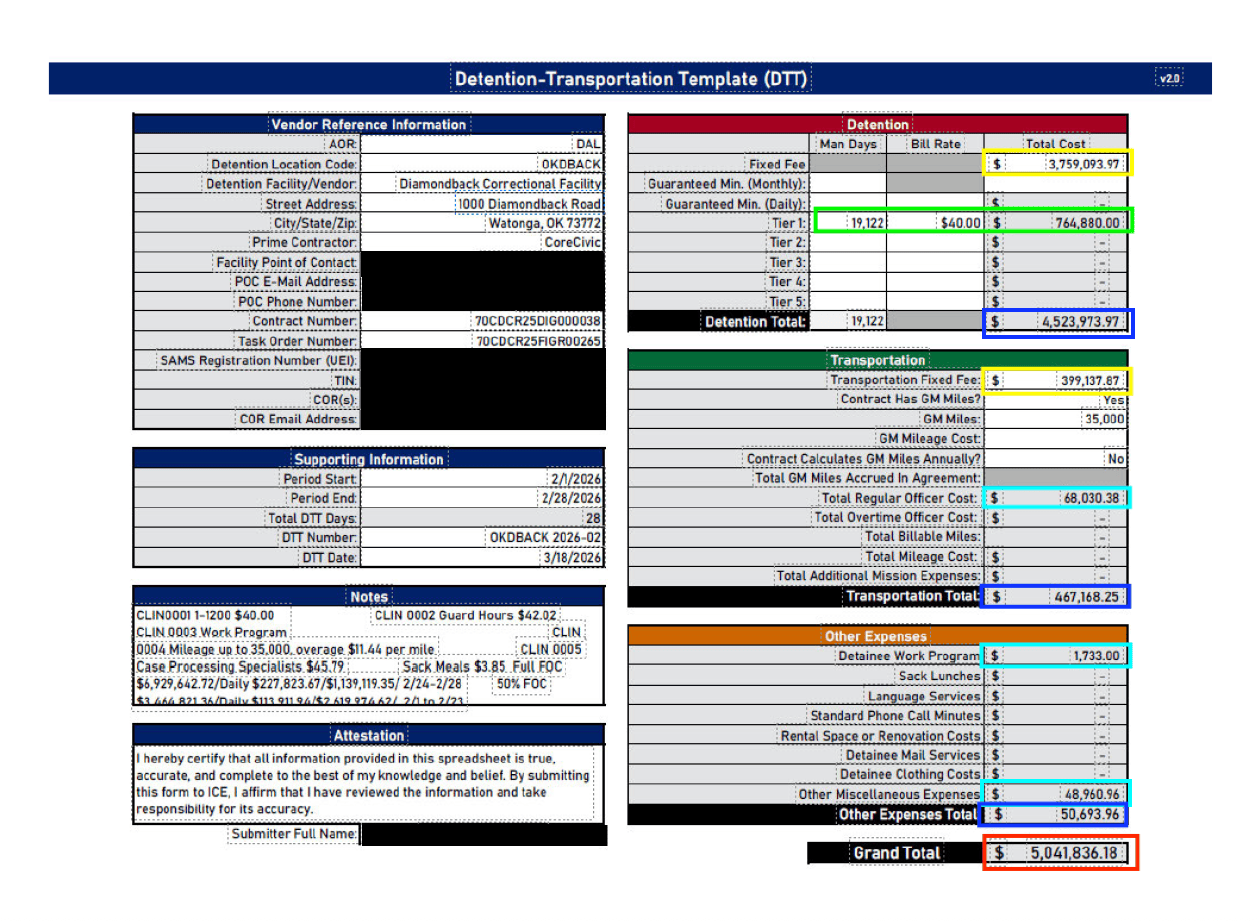
$5,041,836
OKDOC admin fee
$833,333
CoreCivic
$4,208,503
View records
ICE pays more than $5 million as the detainee population continues to climb.
The records


March 2026
Avg. detained / day
699
Total payment
$8,294,050
OKDOC admin fee
$833,333
CoreCivic
$7,460,716
View records
Monthly revenue has more than quadrupled from October.
The records


Local money
Diamondback’s money reaches beyond the prison
CoreCivic and the Oklahoma Department of Corrections aren’t the only entities receiving money connected to Diamondback. Records show the prison is also generating revenue for the City of Watonga.

Watonga, Oklahoma. GREG CONSTANTINE
How Watonga gets paid
Every month, CoreCivic has agreed to pay the City of Watonga $1 per day for each immigrant detained in Diamondback.
Watonga also receives water and sewage payments from CoreCivic.
Open the Watonga agreement ↗
As detention grows, so does local revenue
*This figure is an estimate from documents obtained from the city of Watonga.