

Residents stood against the back walls of Amber’s small community center to make room as the last few landowners trickled in for a meeting with a data center developer in August.
The international developer Aligned Data Centers quietly bought roughly 850 acres of land just half a mile outside of Amber city limits for $17 million in late July. About 45 minutes southwest of Oklahoma City, the more than 400 people who live in Amber are surrounded by cattle pastures and agricultural fields. Residents described it as quiet and peaceful.
Company representatives had called the Aug. 10 meeting to answer questions about the project, but residents were skeptical. A man told company officials that the community did not trust them. At one point, an Aligned official said one landowner who asked pointed questions about why the company had not done studies on the site before buying the property did not understand the development process.
The project could break ground as early as December and include up to 10 data center buildings that would eventually serve tech companies, Aligned officials said.
David Robinson, Aligned’s executive vice president of strategic development, told residents the data center would bring extra tax revenue for schools, hundreds of construction jobs and the potential to increase property values.
“We bought the land, and we are trying to be transparent,” Robinson said.
Support The Frontier
Help fund investigations like this one
The Frontier is a nonprofit newsroom. Your donation pays reporters to investigate powerful institutions across Oklahoma.
Become a donorLandowners were worried about noise and light pollution, effects on their animals and how water would be used in an area that is already stressed by drought, even though the developer says it will truck in water to cool data center servers.
“These farmers and ranchers have been here multi-generations, and they’re concerned about the preciousness of their land,” one man said.
Amber officials said they didn’t learn about plans for the data center until the land sale became public. After the developer spoke, the town council held a meeting and listened to its lawyer describe options for fighting against the project. The development would be tricky to block, the attorney told council members. The town hadn’t been asked for any zoning approvals because the property was outside city limits. Grady County also has no formal planning commission that regulates unincorporated land.
Oklahoma has welcomed data center developers with laws that make it easier for projects to build their own power generation. The projects also qualify for state property and sales tax breaks.
One state lawmaker proposed a statewide moratorium on data centers that didn’t receive a hearing during the last legislative session. At least five other bills to regulate data centers and require more transparency also failed.
Amber tries to fight back
The project was moving too fast, said Mark Straka, who owns property about three miles east of the town. Straka bought land in the area three years ago to pass down to his kids and grandkids, he said. Now, the future of his property can be impacted by what happens with the data center. He worries about how they plan to manage their water use long term and how the community will change as the property is developed.
“By the time we mobilized, it was too late,” Straka said after the August meeting. “They are playing their cards just right.”
Aligned plans to bypass local utilities for most of its water and power. Company representatives said they would truck in about 240,000 gallons of water for each building for the center’s closed-loop cooling system. The company plans to only connect to local water for office buildings.
The town was considering annexing the land Aligned plans to build on, said Amber Mayor Greg Mosier. Amber would have to annex more than 2,500 acres, including the data center property, into city limits so local rules on land-use and regulations on noise and environmental impacts would apply to the data center. Annexing the land would be an ambitious plan, nearly doubling the size of the town and requiring Amber to expand police services.
“They’re coming, and there’s nothing we can do to stop them,” Mosier told The Frontier. “The next step is at least to have some ordinances in place to control it.”

The town has also hired an environmental consultant to assess air quality and noise pollution.
The company currently only has concrete plans for one building, which it said would create about 60 permanent jobs. The project still requires state and federal permits for construction and air quality, representatives said.
An Aligned spokesperson declined to answer written questions from The Frontier about energy and water usage and how the company would respond if Amber is successful in annexing the property.
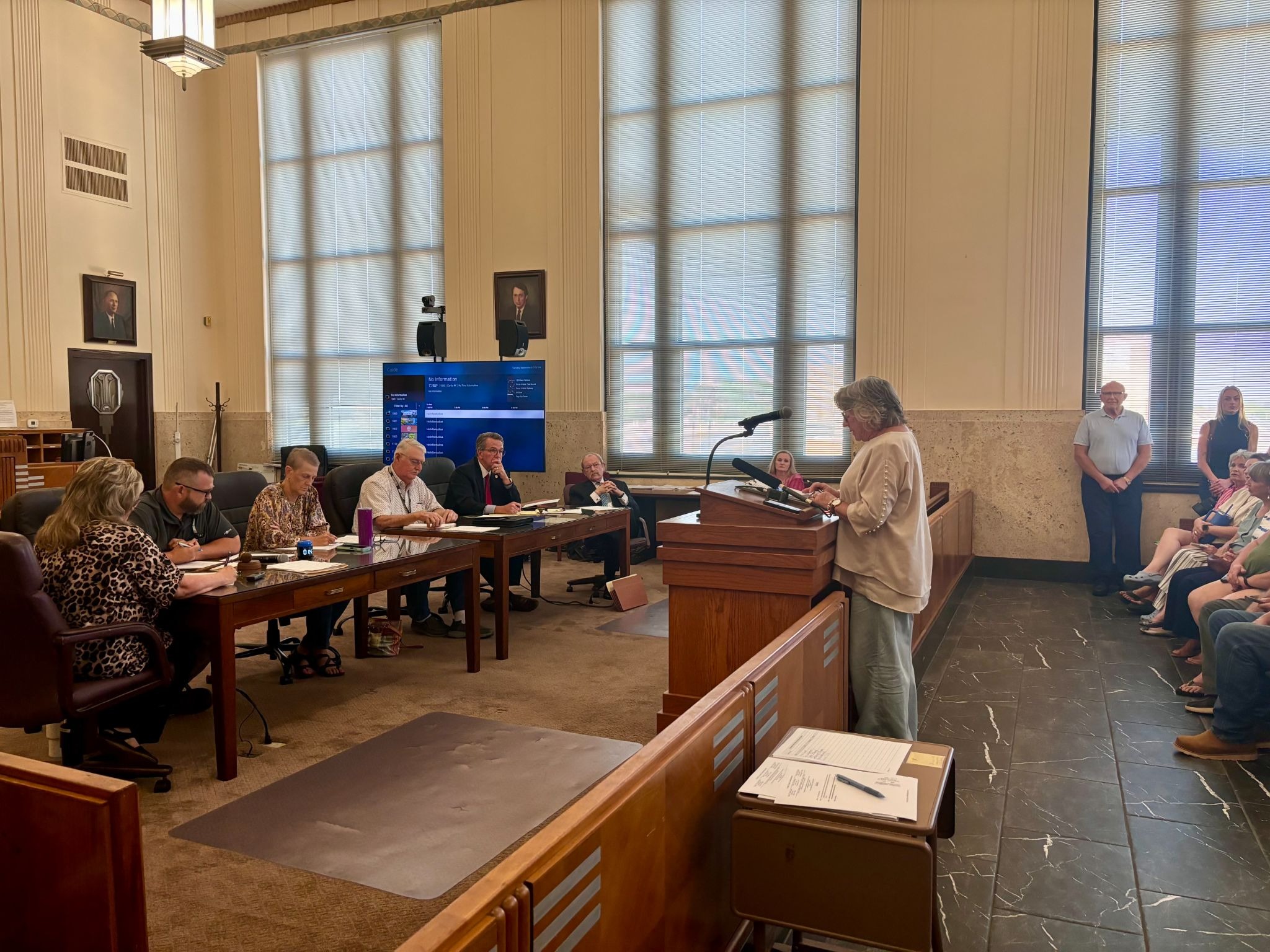
Local opposition to the data center has continued. Grady County commissioners told a courtroom full of residents during a September meeting that they had no jurisdiction over the data center project and could do nothing to stop the development.
“I find it difficult to believe that our county is powerless to fight against a data center when there are so many unknown things,” one woman told commissioners during public comments.
Grady County District Attorney Jason Hicks said if the county tries to regulate the project without the right authority, it could end up in court with the developers. Hicks pointed to a recently released Oklahoma attorney general opinion that limits how counties can regulate the use of county roads during construction projects. Instead, county officials told residents to call their lawmakers.
“I will tell you where a moratorium needs to come from if one is going to happen,” Hicks said. “It’s going to have to come from the Legislature.”
State lawmakers have spent years trying to recruit large economic development projects for electric car and battery manufacturers and now data centers to Oklahoma. The state’s cheap land and energy have been appealing to data center developers. Last year, lawmakers approved the bill that allows data centers to generate their own electricity on-site without being regulated as public utilities, saying it would cut red tape and keep costs down for residential payers. Aligned’s development would be one of the first data centers in the state to make use of the legislation.

Lawmakers did approve two bills this spring that prevent facilities from using groundwater in systems that don’t reuse the water and protect residential customers from rate increases related to high energy usage from data centers.
State Rep. Dick Lowe, R-Amber, owns property two miles away from the data center project. He said the company’s plans seem like they follow the state’s rules, and he’s doubtful that the city could stop the project.
“We have personal property rights, and this state is very, very high on that,” Lowe said. “It’s their right as a company, and it was the right of that person to sell that land. As long as they follow the statutes and do the things that we’ve laid forth.”
Lowe and Senate Pro Tem Lonnie Paxton, R-Tuttle, sat in on the August meeting between landowners and representatives from Aligned, quiet as other residents talked about their frustrations. Tuttle is a 12-minute drive north of Amber. After the meeting, Paxton said he is generally supportive of data centers, “but it depends on the specifics.”
Amber’s town council held a hearing Sept. 22 to meet with landowners who would have potentially been annexed into city limits, including Lowe. Mosier, Amber’s mayor, said a handful of landowners who had originally agreed to the annexation had pulled out. The council voted to cancel annexation plans. Mosier said he isn’t sure what the town can do next.
After the hearing, Lowe said he had talked to other landowners about the negatives of being annexed into city limits, like covering costs if Aligned were to sue the city. Lowe said the annexation failing was “the right thing to happen.”
Lowe and Paxton both said they expect more data center-focused legislation next year, including bills that may address questions about local control. By then, early construction may have already started in Amber.
“I know we have to let technology in, but there’s a place for it, and I don’t believe it’s in the middle of farming communities,” said Kim Porter, who has lived outside Amber for 30 years.


Kayla joined The Frontier in 2021. She covers social services, energy and the environment. She can be reached at Kayla@readfrontier.com